Let me guess. You've heard people rave about cruises. You've seen the photos — sun decks, beautiful ports, formal nights with fancy drinks. But you've never actually done it, and there's a small but persistent voice in the back of your head going, "Is this actually for me, or is this a lot?"
I hear this all the time. And my answer is almost always the same: once you understand how cruising actually works, the question usually answers itself.
Here's everything you need to know before you book your first cruise — no fluff, no brochure language, just the real information.
First: How Is a Cruise Different From a Resort Vacation?
This is the question that matters most for first-timers, so let's start here.
A traditional resort vacation works like this: you pick a destination, book a hotel, figure out restaurants for each night, research activities, sort out transportation between places, and manage all of it yourself. It can be wonderful — but it also requires a significant amount of planning and decision-making, both before and during the trip.
A cruise works differently. When you book a cruise, one reservation covers:
Your accommodations — your stateroom is your hotel for the entire trip
Transportation between destinations — the ship moves while you sleep
Meals — main dining rooms and buffet-style restaurants are included in your fare
Entertainment — shows, live music, comedy, trivia, deck parties, and more, every night
Activities — pools, fitness centers, classes, games, and programming all day long
You unpack once, on embarkation day, and your room travels with you to every destination on the itinerary. There is no checking in and out, no hauling luggage between cities, no figuring out a new neighborhood every two days.
That's the core of what makes cruising uniquely easy — and why so many people who try it once become people who cruise repeatedly.
What's Actually Included in a Cruise Fare?
This trips people up, so let's be clear.
Typically included: your stateroom, main dining venues, entertainment, pools and fitness facilities, and most basic beverages like coffee, tea, and non-bottled water.
Typically not included (but available to purchase): specialty restaurants, alcohol and cocktails, shore excursions, spa services, Wi-Fi, specialty coffees and soda, and gratuities (though many cruise lines now include these in certain fare types or packages).
The key is knowing what your specific booking includes before you sail so you're not surprised by the bill at the end. A good travel advisor — that would be me — will walk you through exactly what's covered and help you decide which add-ons are worth it for how you travel.
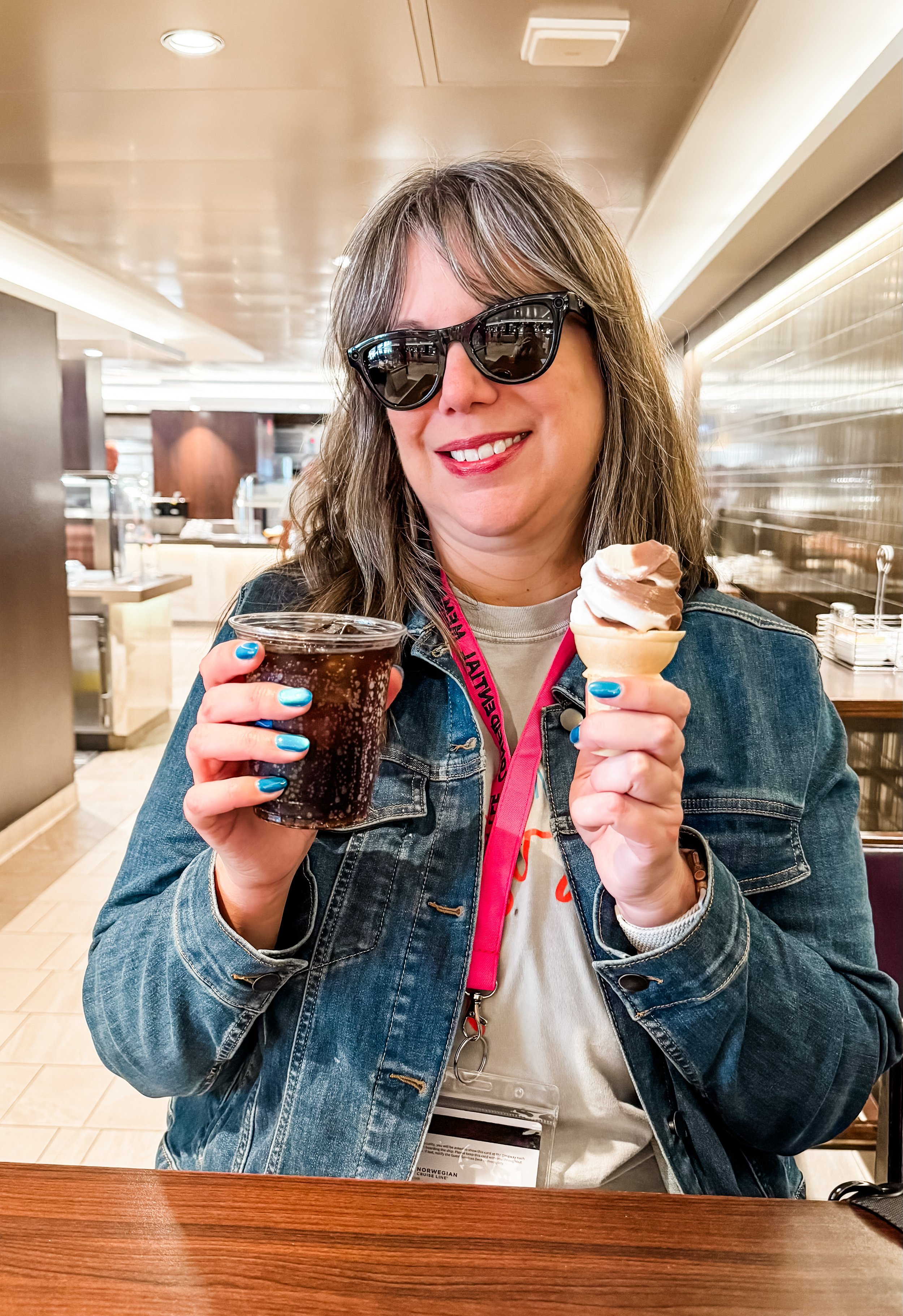
A good travel advisor has experienced all that a cruise has to offer!
How Do You Choose the Right Cruise Line?
This is genuinely important, because cruise lines are not interchangeable. Each one has a distinct personality, and the right fit matters.
If you're traveling with kids or young families: Disney Cruise Line and Royal Caribbean are both exceptional. Disney for the immersive magic; Royal Caribbean for the massive ships with every activity imaginable — rock climbing walls, ice rinks, waterslides, you name it.
If you want a fun, party-forward adults experience: Norwegian Cruise Line and Carnival are the go-tos. Norwegian in particular offers a highly flexible, "Freestyle Cruising" experience with no fixed dining times or formal dress codes.
If you want a more refined, premium experience: Celebrity Cruises and Princess Cruises hit a sweet spot between mainstream and luxury — elevated dining, beautiful ships, and a slightly more sophisticated atmosphere.
If you want all-inclusive luxury where everything is already covered: Viking, Oceania, Azamara, Silversea, and Regent Seven Seas remove the nickel-and-diming entirely. Shore excursions, premium beverages, specialty dining, and gratuities are typically included. These lines are an investment, but for many travelers the full value is worth it.
If you want adults-only and an edgy, design-forward experience: Virgin Voyages is in a category of its own — all-inclusive base fare, no kids, and a vibe unlike any other cruise line on the water.
How Do You Choose the Right Itinerary?
The short answer: pick destinations you actually want to visit, and don't overthink the length.
A 3–4 night cruise is a great first cruise. It's enough time to get comfortable with how everything works without committing to a full week. Bahamas and Caribbean short sailings from Florida ports are the most popular and easiest for first-timers.
A 7-night Caribbean sailing is the most common first "real" cruise — enough ports to feel like a full vacation, with a good balance of sea days (days at sea with no port stop, where you just enjoy the ship) and port days.
Longer itineraries — Mediterranean, Alaska, Northern Europe — are wonderful, but there's something to be said for getting your sea legs on a first sailing before committing to two weeks abroad.

A travel advisor can help ensure your view is not obstructed when booking a balcony stateroom.
What Should You Know About Staterooms?
Your cabin choice matters more than most people realize going in.
Interior cabins have no window and are the most affordable. They're great for travelers who plan to spend most of their time outside the room.
Ocean view cabins have a window but no balcony. A nice middle ground.
Balcony cabins are the sweet spot for most travelers — your own private outdoor space to have coffee in the morning, watch ports come into view, and decompress at the end of the day. On scenic itineraries especially (Alaska, Norway, the fjords), a balcony is worth every penny.
Suites offer a significantly elevated onboard experience — larger spaces, butler service, exclusive lounge access, priority boarding, and more. Many cruise lines have suite-class programs that function almost like a ship within a ship.
What About Getting Sick at Sea?
Two things to know. First, modern cruise ships are significantly larger and more stable than most people imagine. They have what is called stabilizers which help to minimize the movement of the ship. Still, motion sickness concern is real for some, but far less common than first-timers expect. Second, if you're prone to motion sickness, there are easy remedies: Sea-Bands, over-the-counter Dramamine, and prescription patches all work well. Choosing a cabin midship and on a lower deck also minimizes movement.
Don't let this be the reason you don't book. It's very manageable.
What's the Embarkation Day Actually Like?
Embarkation day — the day you board the ship — can feel chaotic if you're not prepared. Here's what to expect: you'll check in at the cruise terminal (bring your passport and booking confirmation), drop off your checked luggage with porters, and board in waves based on your check-in time. Once on board, your cabin may not be ready immediately, so head to the buffet for lunch, explore the ship, and enjoy the fact that your vacation has officially started.
Pack a small carry-on with anything you'll need for the first few hours — swimsuit, medication, valuables — since your checked bags may arrive at your cabin later in the afternoon.
My Honest Advice for First-Timers
Book with a travel advisor. I know I'm biased, but I mean it. The cruise lines have hundreds of ships, thousands of cabin categories, and packages that can be genuinely confusing to navigate alone. A good advisor costs you nothing extra (we're paid by the cruise lines, not by you), and we know which cabins to avoid, which ships are right for your travel style, and how to get you the most value for your budget.
Cruising is one of the most rewarding, relaxing, and genuinely easy ways to see the world. The first one is always a little bit of "I can't believe I waited this long."
Ready to make it happen? Start here.